UK Plantain Market Trends in 2025
Plantains have solidified their place in the UK’s fresh produce scene, moving from a niche ethnic ingredient to a staple in many wholesale and retail markets. Demand is on the rise – UK consumption of plantains jumped 26% in 2024 to about 42,000 tons, with market value surging to $40 million (indexbox.io). This growth is driven by increasing popularity among diverse consumer groups, including African, Caribbean, and Latin American communities, as well as health-conscious foodies exploring plantains as a versatile carbohydrate. The upward trend is expected to continue (albeit at a moderate pace of ~1.5% volume CAGR) through the next decade. Import supply has kept up with demand: Colombia is the dominant supplier, providing about 66% of UK plantain imports, alongside significant volumes from countries like Ecuador, Ghana, and the Dominican Republic. With steady imports and growing consumption, plantains are no longer an exotic rarity in UK fresh produce markets – they’re a high-demand item from wholesale depots to local street markets like Lewisham Market in London.
Why the buzz? One factor is the UK’s increasingly multicultural palate – dishes like fried plantains, tostones, and plantain fufu are now familiar beyond just the communities of origin. Mainstream supermarkets (e.g., Tesco) have even added plantains to their produce aisles (often sourced from Latin America). Additionally, more people are embracing plantains for their nutritional value (rich in potassium and fiber) and as a gluten-free, “good carb” alternative to potatoes or bread. For market stall traders and wholesalers, these trends mean high-intent buyers – customers actively seeking quality plantains in bulk. Keeping an eye on what grades, sizes, and packaging options are most popular can help you stay competitive in serving this demand.
Grades of Plantains: Class I vs Class II
In wholesale produce, grade refers to the quality class of the fruits. Understanding plantain grades is crucial because they affect both pricing and customer satisfaction. The UK follows standard produce grading: Class I plantains are good quality with only minor skin or shape defects, whereas Class II may have more noticeable blemishes, bruising or irregularities (yet still sound and edible). There’s also an “Extra Class” for superior quality, but in practice, most imports fall into Class I or II.
Which grade sells best? For high-traffic markets and discerning customers, Class I plantains are the clear winner. They have the attractive appearance – uniform size, unblemished yellow-green skins – that draws shoppers. Many consumers specifically look for Class I produce and are prepared to pay the price for it. Market stall buyers report that class I plantains not only fetch better prices per piece, but also result in less waste (fewer unsellable or spoiling fruits). Class II plantains, on the other hand, often end up in secondary outlets or are sold at a discount – they’re cheaper upfront, which may tempt budget-oriented stallholders. Still, the trade-off is a shorter shelf life and potentially pickier customers. Suppose your goal is to build a reputation for quality at your stall. In that case, it’s usually worth sourcing Class I. (Notably, our company supplies only Class I grade to ensure you get top-quality fruit consistently.)
That said, Class II isn’t entirely off the table – they can sell in specific contexts, like making plantain chips, or to customers who don’t mind a few spots. Some savvy stall owners use Class II for very ripe plantains (which will be fried that day), since minor skin defects don’t matter once cooked. However, be transparent if you’re selling lower-grade plantains and adjust prices accordingly. In summary, know your customer base: if they value cosmetic quality and longevity, stick to Class I. If there’s demand for bargain, fully ripe plantains for immediate use, Class II could have a small place – but don’t make it your core offering.
Optimal Plantain Sizes for Wholesale Markets
Apart from quality grade, size is another decision point when buying plantains in bulk. In the UK wholesale, plantains are not typically labeled by a numbered size category like some fruits, but you’ll notice variation in length and girth. Medium-to-large plantains (roughly 8–12 inches long) tend to be the top sellers for most market stall applications. They offer a substantial amount of flesh per fruit, which customers perceive as good value – a single large plantain can be a side dish for multiple portions. Stallholders often price plantains by piece (e.g., “3 for £1” deals for medium ones or “2 for £1” if larger), so having a reasonably large but not gigantic size hits the sweet spot for both shopper appeal and margins.
Extremely large plantains (sometimes over 12 inches, very thick) can be eye-catching and work well if you sell by weight, but if priced per piece, they may need a higher price point that some retail customers resist. A mix of sizes can be helpful: you could display a few jumbo plantains (there’s always a customer looking for the biggest plantain in the pile), while keeping the bulk of your stock in the medium range that moves fastest. Small plantains (under 6 inches) are less common in wholesale crates – these might be immature or dwarf varieties. They generally have lower demand unless a restaurant client specifically wants petite plantains for individual servings. In a market stall setting, very small plantains might only sell if bundled (e.g., 5 for £1 for small ones). Thus, for mainstream wholesale and market sales in the UK, aim for mid-sized fruits that are neither too tiny nor unwieldy for customers. Consistency in box size is also helpful, so you can set a fair price by count. When speaking with your supplier, you can ask roughly how many plantains come in an 18kg box – this will give a clue to the average size. Many wholesalers source plantains that yield about 40–60 fruits per 18kg case, which is a good benchmark for medium size.
Packaging Options and Best Practices
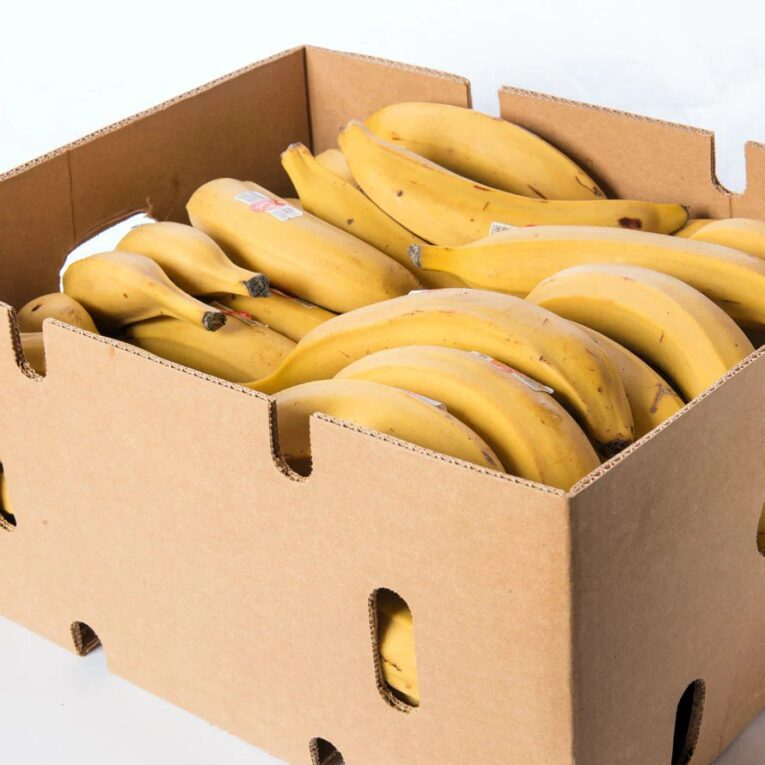
Figure: A typical wholesale case of plantains (~18 kg) in a standard cardboard box (These ventilated boxes protect the fruit and allow airflow to prevent spoilage during transit.
Most fresh plantains in the UK are shipped and sold in bulk in cardboard boxes or crates holding around 18–25 kg of net fruit weight. The standard wholesale pack is often ~18 kg (40 lbs) per box, as shown above, though some suppliers use larger 22–25 kg cartons. This bulk packaging is favored in wholesale markets because it’s sturdy, stackable, and cost-effective. The cardboard crates usually have ventilation holes and sometimes wax coating – ideal for tropical produce as they allow heat and ethylene gas to escape, extending shelf life. Buyers at New Spitalfields or Western International Market will recognize the ubiquitous brown banana boxes repurposed for plantains.
Are there special packaging options? In general, plantains do not require sophisticated packaging like some delicate fruits do. Simple bulk boxes suffice to keep them safe. Some importers/exporters pack plantains with a foam liner or paper between layers to minimize bruising. Still, you won’t typically see wholesale plantains individually wrapped or in consumer packs – that would add cost with little benefit. A few suppliers might offer half-boxes (e.g., 10 kg) for smaller businesses or pre-bagged, smaller portions (5–10 kg) for convenience, but this is relatively rare. The norm is that market stall buyers purchase full boxes and then split them or do their own retail packaging if needed. Our company follows industry standards: we deliver plantains in original bulk boxes and do not offer special packaging or custom pack sizes to maintain efficiency and low costs.
From a reseller’s perspective, packaging can impact your bottom line in subtle ways. Sturdy, well-ventilated boxes mean fewer damaged fruits – always inspect boxes on delivery for any signs of mishandling (dents, moisture). Good packaging also preserves freshness; plantains generate heat as they ripen, so boxes with air holes help avoid overheating. If a supplier ever offers vacuum-sealed or plastic-wrapped plantains, be cautious – while polyethylene bagging can prolong green life for shipping, once at ambient market conditions, it may trap moisture and accelerate rot. It’s best to stick with breathable packaging. Finally, consider the practicality: boxes with hand holes (for easy lifting) and uniform dimensions will make your life easier when transporting and storing your stock. In the UK wholesale market, banana/plantain cartons are standardized, which is convenient because they stack securely. Dispose of or recycle empty boxes promptly (they are usually recyclable cardboard) to keep your stall area tidy.
Buying Tips for Market Stall Traders
Buying plantains for a market stall or wholesale business isn’t just about grabbing the nearest box – a bit of strategy can save you money and improve your product quality. Here are some actionable tips for smarter bulk plantain purchasing, especially tailored to UK market stall operators:
-
- Prioritize Grade and Freshness: Always confirm you’re getting Class I plantains unless you intentionally want cheaper Class II for a specific use. Check the produce on arrival – Class I should have clean skin with only minor marks and no signs of mold or deep bruises. Don’t hesitate to reject a box if the quality doesn’t meet expectations. Remember, quality in = quality out for your customers.
-
- Choose the Right Ripeness Stage: Decide if you need green, turning, or ripe plantains and order accordingly. Green plantains (unripe) are starchy and have a longer shelf life (they can take 1-2 weeks to ripen off the plant). Ripe yellow-black plantains are sweet and ready to cook immediately but perish more quickly. Many stallholders opt for green to ripen them gradually, ensuring a longer selling window. If sourcing from a wholesale market like Birmingham or Manchester, you might find both green and ripe boxes – pick what suits your sales cycle. Pro tip: If you buy a mix of green and semi-ripe, you can sell the ripe ones first and let the green ones ripen for later in the week.
-
- Mind the Size and Count: When comparing suppliers in the UK, ask about the size distribution of the plantains. As noted, an 18kg box might contain ~50 medium or ~30 very large plantains. If your customers prefer buying by the piece, having more medium-sized fruits could maximize your profit compared to fewer giant ones. Also, more uniform sizing within a box looks attractive on display and simplifies pricing (e.g., you can confidently do “each £X” if all pieces are similar).
-
- Bulk Purchase Planning: Gauge how many boxes you can realistically sell before they become overripe. It’s often better to restock more frequently than to over-buy and end up with unsold, spoiled fruit. For example, if you run a stall at Lewisham Market known for high footfall, you might move multiple boxes a day. But at a smaller weekly farmers’ market, a full 18kg box could be plenty. Some wholesalers require a minimum order, but others may accommodate half-box orders – this can be useful when testing a new location or when plantain demand is uncertain. Always balance the bulk discount vs. the waste equation.
-
- Compare Suppliers and Prices: Do a quick supplier comparison on key factors: price per kg (or per box), quality consistency, and reliability of supply. The cheapest bulk plantain price isn’t a bargain if half the box arrives damaged or if the supplier can’t deliver during peak demand. Look for a wholesaler with good handling practices and steady availability (plantains can be prone to seasonal supply dips, though suppliers now source globally to bridge gaps). It’s worth building a relationship with a supplier who understands your needs – for instance, someone who will swap out an overripe box or give you a heads-up when new crop sizes/grades change.
-
- Storage and Handling: Once you’ve bought your plantains, treat the stock well to preserve quality. Keep the boxes in a cool, shaded, and well-ventilated area (around 12–15°C if possible). Avoid stacking too many boxes on top of each other for long periods – the weight can bruise the lower fruits. If you notice any fruit starting to go entirely black and mushy, remove it from the box immediately (one rotting plantain can speed up others due to ethylene gas). By storing properly, Class I plantains can have a shelf life of a week or more, giving you ample time to sell through your bulk purchase.
Following these tips will ensure that when you buy plantains in bulk for your stall, you’re getting the best value and delivering quality to your customers. A bit of preparation goes a long way in the wholesale produce game!
Processed Plantain Products: An Emerging Opportunity
Fresh whole plantains are the core of the market, but it’s worth noting the rising trend of processed plantain products – something both wholesalers and market stalls may capitalize on (even if just to be aware of what end-buyers are looking for). In the UK and globally, plantain chips have become a popular snack, and plantain flour is gaining traction as a health-conscious ingredient.
Plantain chips (crisps) – the crunchy snack made from thinly sliced fried plantains – are “taking over the UK green snacks market” according to some observers. Brands like Olu Olu, Grace, and others now offer packaged plantain crisps in various flavors (salted, chili, sweet, etc.), positioning them as a gluten-free, vegan alternative to potato chips. Demand is fueled by consumers seeking healthier or allergen-friendly snacks; indeed, more UK shoppers are looking for vegan and gluten-free options, and plantain chips tick both boxes by nature. The global market for plantain chips is expanding steadily (one report projected it to reach about $152 million by 2025), and the UK is part of that growth with ethnic and mainstream supermarkets stocking these products.
For a market stall or wholesaler, what does this mean? If you deal in plantains, you might consider also keeping some popular brands of plantain chips to offer your customers a ready-to-eat option. Some stall owners report that having a value-added product like crisps (especially recognizable brands that diaspora customers trust) can boost impulse sales. It’s an easy upsell when someone is buying fresh plantains: “Have you tried these plantain crisps?” – it caters to curious new customers and those who love the taste of plantain in snack form. However, ensure you have the appropriate food seller licenses if you start selling packaged foods, and check the sourcing (you might get them from the same wholesale cash-and-carry that supplies your other goods).
Plantain flour is another product making waves. This is essentially dried, milled plantain (often from green plantains) used as a flour substitute. It’s a naturally gluten-free, high-fibre alternative to wheat flour, popular for making West African fufu, pancakes, breads, or as a thickener. Health food stores and Afro-Caribbean shops in the UK have seen growing interest in plantain flour for both traditional cooking and modern gluten-free baking. The global plantain flour market is expected to grow at about 4.6% annually through 2034, indicating steady uptake. While this is a more niche product than chips, as a wholesaler you might be asked about it by restaurants or health-oriented grocers. Even if you don’t supply processed products (we currently focus only on fresh Class I plantains), it’s wise to stay aware of these trends. For instance, if you have catering clients, you could advise them on where to source quality plantain flour or discuss the possibility of stocking it in the future if demand warrants.
Bottom line: processed options like chips and flour reflect a broader market ecosystem around plantains. They won’t replace fresh plantains (nothing beats the real fruit for most dishes), but they complement it. A forward-thinking market trader might use the popularity of chips to attract customers (“free sample of plantain chips if you buy a box of plantains!”) or use plantain flour’s buzz in marketing (“did you know you can make gluten-free cakes with plantain flour?”). Staying attuned to these developments can set you apart as an expert in all things plantain – not just a seller of whatever comes in a box.
Conclusion
Plantains in 2025 UK wholesale markets are a vibrant business, with demand climbing and opportunities for savvy wholesalers and stall owners to thrive. To recap the key points: focus on quality Class I grades to keep customers happy and reduce waste, aim for medium-large sizes that balance value and ease of sale, and stick with reliable bulk packaging (18–25kg cardboard boxes are the industry standard for good reason). Pay attention to how you buy – from comparing suppliers to planning your stock levels – because smart purchasing and handling will protect your profit margins. And while you concentrate on selling fresh plantains (the heart of your business), stay aware of the wider plantain landscape: trends like ready-made chips and flour are expanding the fruit’s popularity and could open new avenues for you in the future.
By choosing the right grades, sizes, and packaging, and by offering practical value to your customers (be they market shoppers or B2B buyers), you position yourself as a go-to wholesale plantain supplier in the UK. Whether it’s a bustling stall in Lewisham Market or a warehouse supplying restaurants, the principle is the same – know what sells best and why. Plantains might have been considered an “exotic” not long ago, but today they’re mainstream enough that excellence in how you source and present them makes all the difference. Here’s to sweet success (and perfectly fried plantains) in your wholesale market endeavors!